
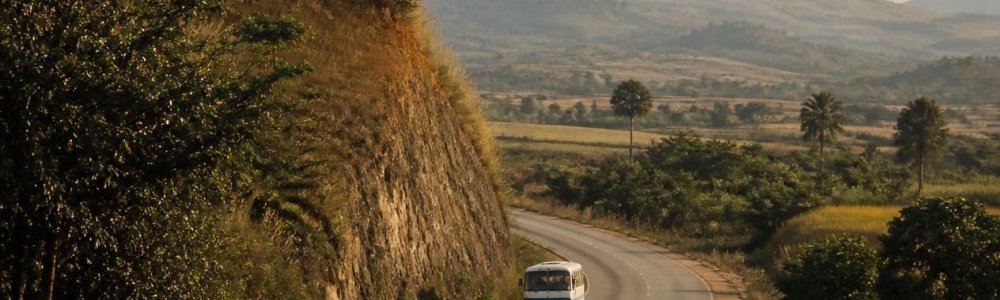
There was a time when travelling across Nigeria could be an adventure rather than an act of calculation.
In a recent reflection, Nigerian lawyer Abdul Mahmud recalled a five-week road journey he undertook in 1998 with his girlfriend, travelling from Lagos through Benin, Warri, Port Harcourt, Aba, Ikot Ekpene, Calabar, Ogoja, Obudu, Makurdi, Jos and Auchi. His story is more than nostalgia. It captures a Nigeria in which movement across the country, even over long distances and through unfamiliar places, could still be approached with a sense of freedom and curiosity.
I can relate to that experience in a smaller way. I travelled through parts of Northern Nigeria in 2015, and although the country certainly had its problems then, travelling through those places did not carry the same psychological calculation that it would today. I do not think I would casually undertake the same journey now.
That is perhaps one of the clearest ways to understand what insecurity does to a country. It does not merely produce statistics, headlines or isolated tragedies. It gradually changes the behaviour of ordinary people. Roads that once connected cities become routes to be reconsidered.
Places that once represented adventure become places requiring warnings, escorts, careful timing or outright avoidance. A country is not truly free when its citizens cannot move freely through it.
What makes Mahmud's story particularly powerful is the sheer ordinariness of it. Friends joined and left the journey. They visited old acquaintances, explored local products, paid respects to families and spent days in different cities simply experiencing the country.
There was no grand national project behind it. It was simply people living in their country. That kind of freedom is easy to appreciate only after it begins to disappear.
The question facing Nigeria is therefore larger than how to reduce insecurity in particular locations. It is whether we can restore a country in which Nigerians once again feel that their own geography belongs to them, where travelling from Lagos to Jos, Calabar to Ogoja, or Kaduna to Abuja is understood as ordinary movement rather than a risk assessment.
Perhaps bringing Nigeria back does not begin with remembering everything that was good about the past. It begins with recognising what we have lost and deciding that it should not become permanent.