
War is often discussed in the language of strategy, territory, security and national interest. Yet beneath every calculation lies a more enduring reality: human lives lost, families divided, children deprived of their futures and societies permanently altered by violence.
In a recent reflection on the Russian-Ukrainian war, Iuliia Mendel places that human cost at the centre of the debate. Her argument is that no political objective, however ambitious, can erase the consequences of a conflict that consumes lives and human potential on such a vast scale.
The question, therefore, is not only what can be gained through continued war, but what will remain when the fighting eventually ends. A country may recover territory, rebuild infrastructure and restore institutions, but the lives lost and generations shaped by war cannot simply be restored.
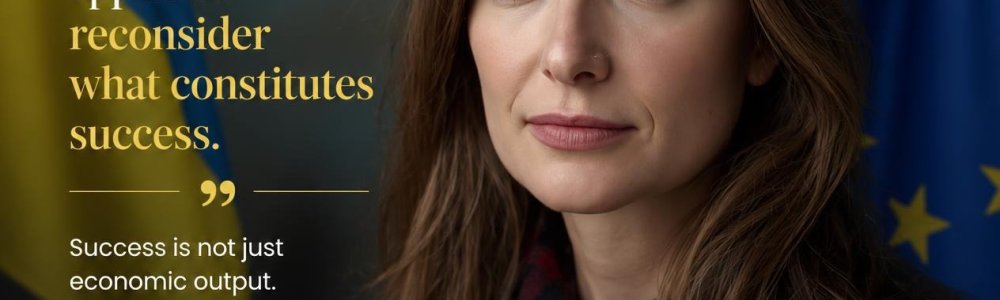
Mendel's appeal to European politicians is ultimately an appeal to reconsider what constitutes success. She calls for greater political unity around ending the war and restoring stability and security to Europe, arguing that the pursuit of peace should receive the same seriousness and political determination that has been given to the prosecution of the conflict.
There is a deeper moral question beneath this argument. History does not measure political decisions only by the objectives proclaimed when they were made. It also measures them by their consequences. The true legacy of any strategy is therefore found not merely in what it achieves, but in what it preserves.
In the end, the most important question may be remarkably simple: after all the arguments, strategies and sacrifices, what did we save?